


%20(1).avif)
.avif)

Introduction
In today's business landscape, where mobile communications are pivotal, navigating the intricate web of regulatory compliance is not just beneficial—it's essential. Industries like healthcare and finance face unique challenges, making it imperative for organizations to grasp various regulatory frameworks such as HIPAA, FINRA, and GDPR. Furthermore, implementing robust security measures is crucial to safeguarding sensitive data.
By seamlessly integrating mobile solutions with existing compliance systems and cultivating a culture of education around best practices, businesses can significantly enhance their communication strategies while protecting themselves from potential legal pitfalls.
This article explores the critical steps organizations can undertake to ensure their mobile communications are secure, compliant, and efficient.
Understand Regulatory Frameworks for Mobile Communications
To effectively manage mobile interactions in regulated sectors, enterprises must first understand Mobile Phone Communications Compliance in Regulated Industries and the relevant regulatory frameworks. Understanding these regulations is not merely important; it is essential for Mobile Phone Communications Compliance in Regulated Industries and maintaining operational integrity. Key regulations include:
-
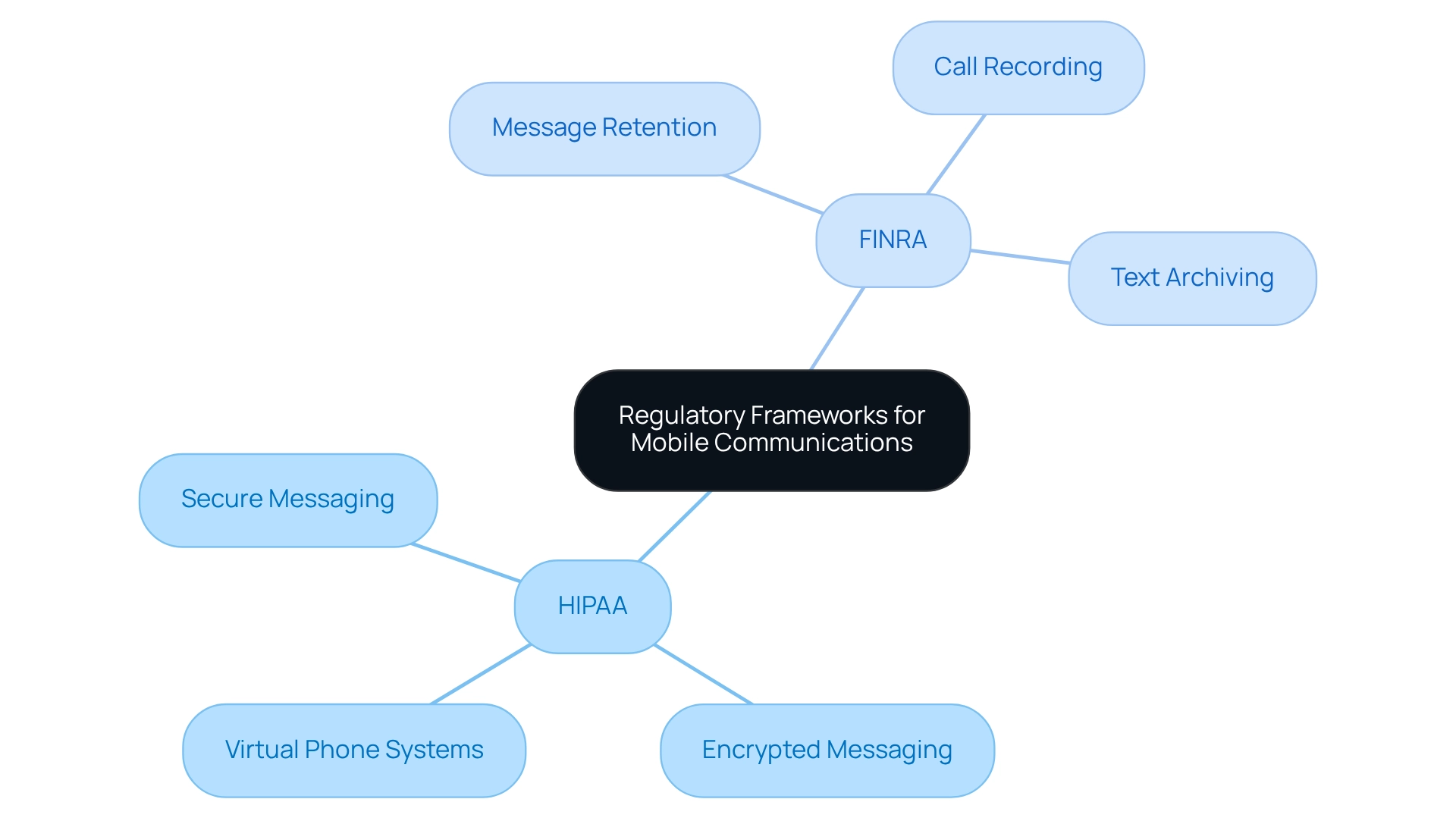
HIPAA: For healthcare organizations, ensuring secure interactions that comply with patient privacy laws is crucial. The service provides HIPAA-compliant options, including encrypted messaging and secure call solutions, vital for maintaining patient confidentiality. Additionally, the app offers virtual phone systems, secure messaging, and dedicated fax lines, enabling healthcare professionals to communicate securely and efficiently.
-
FINRA: Financial services firms face stringent guidelines regarding message retention and supervision. The platform supports Mobile Phone Communications Compliance in Regulated Industries by offering features such as call recording and text archiving, which assist firms in retaining and overseeing their wireless interactions in accordance with industry standards. The platform's robust security features, including encryption and advanced password policies, are essential for organizations to achieve Mobile Phone Communications Compliance in Regulated Industries while also complying with GDPR mandates. By comprehending these regulations and leveraging secure messaging solutions, companies can significantly enhance their strategies to ensure compliance and avoid costly penalties. Are you ready to take the necessary steps to protect your organization?
Implement Robust Security Measures for Mobile Communications
To safeguard wireless interactions, organizations must prioritize security measures that can significantly mitigate risks associated with data breaches.
Encryption is paramount. Implementing end-to-end encryption for all wireless exchanges protects sensitive data from unauthorized access. The virtual messaging system employs secure pathways with encryption, ensuring that messages remain private and comply with industry standards.
Multi-Factor Authentication (MFA) is non-negotiable. Mandating MFA for accessing cellular messaging applications adds an essential layer of security. The application supports advanced password regulations, including two-factor authentication, thus enhancing protection for sensitive data.
Regular Security Audits are critical. Conducting periodic evaluations of wireless systems helps identify vulnerabilities and ensures compliance with security standards. This platform's robust security features assist organizations in meeting financial and legal regulations, including the Dodd-Frank and Consumer Protection Acts.
Secure Mobile Applications are necessary. Utilizing mobile applications designed with security in mind is essential for achieving Mobile Phone Communications Compliance in Regulated Industries and adhering to industry regulations and best practices. This service offers HIPAA-compliant secure communications, covering calling, texting, and voicemail tailored for healthcare professionals. Moreover, the BYOD readiness of the service allows teams to connect seamlessly to a centralized system, boosting operational efficiency. Organizations can securely send or receive online faxes using the provided online portal, ensuring compliance with Mobile Phone Communications Compliance in Regulated Industries, which helps businesses significantly reduce the risk of data breaches and enhance their regulatory compliance. Are your current systems equipped to handle these challenges?
Integrate Mobile Solutions with Existing Compliance Systems
To ensure Mobile Phone Communications Compliance in Regulated Industries across all messaging channels, organizations must take decisive action:
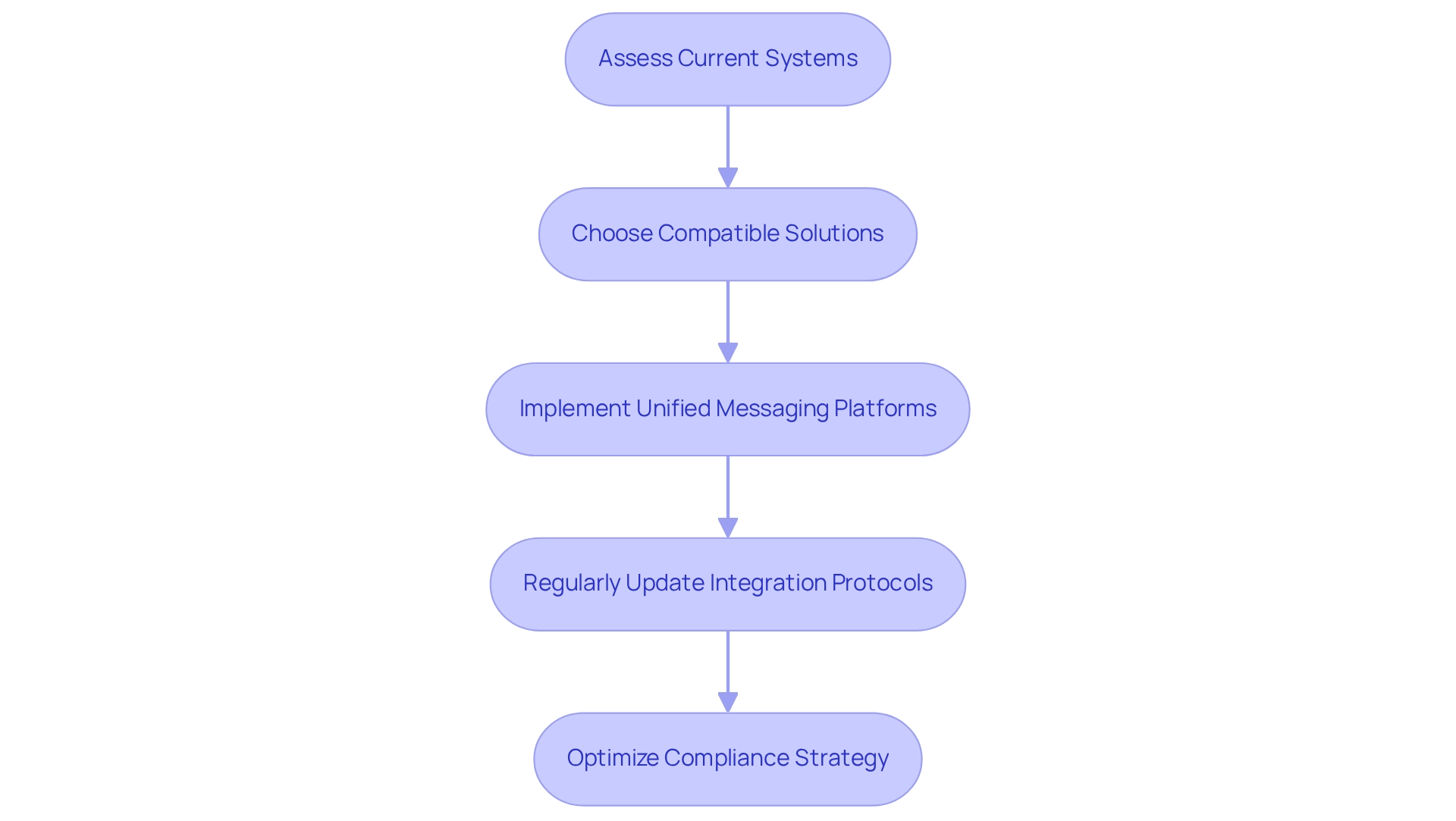
- Assess Current Systems: Evaluate existing adherence systems to identify gaps in portable messaging coverage.
- Choose Compatible Solutions: Select portable messaging solutions that seamlessly integrate with current adherence systems, offering features such as encryption, two-factor authentication (2FA), and call recording to enhance security and ensure compliance.
- Implement Unified Messaging Platforms: Utilize platforms that consolidate various messaging methods—voice, text, video—into a single interface to support Mobile Phone Communications Compliance in Regulated Industries. This ensures all messages are captured and compliant. The application from Plum provides vital tools for ensuring Mobile Phone Communications Compliance in Regulated Industries, including call recording and text archiving, which are crucial for following regulations such as Dodd-Frank and Consumer Protection Acts. For instance, a healthcare practice effectively utilized a phone-tree with extensions and HIPAA-adhering texting to establish a contemporary, efficient messaging system.
- Regularly Update Integration Protocols: As regulations evolve, routinely revise integration protocols to guarantee continued adherence to new requirements. The platform’s capability to link with external systems via its API enables organizations to maintain high levels of transparency and adherence to regulations. A software firm demonstrated this by implementing the service to enhance interaction among remote workers. By integrating portable solutions like this platform with current regulatory systems, businesses can optimize their Mobile Phone Communications Compliance in Regulated Industries while improving their overall interaction strategy. This ultimately aids Healthcare IT Directors in their goal to uphold regulatory standards. Are you ready to elevate your messaging systems to meet compliance and enhance security?
Educate Employees on Compliance and Best Practices
To foster a culture of adherence, organizations should consider the following strategies:
-
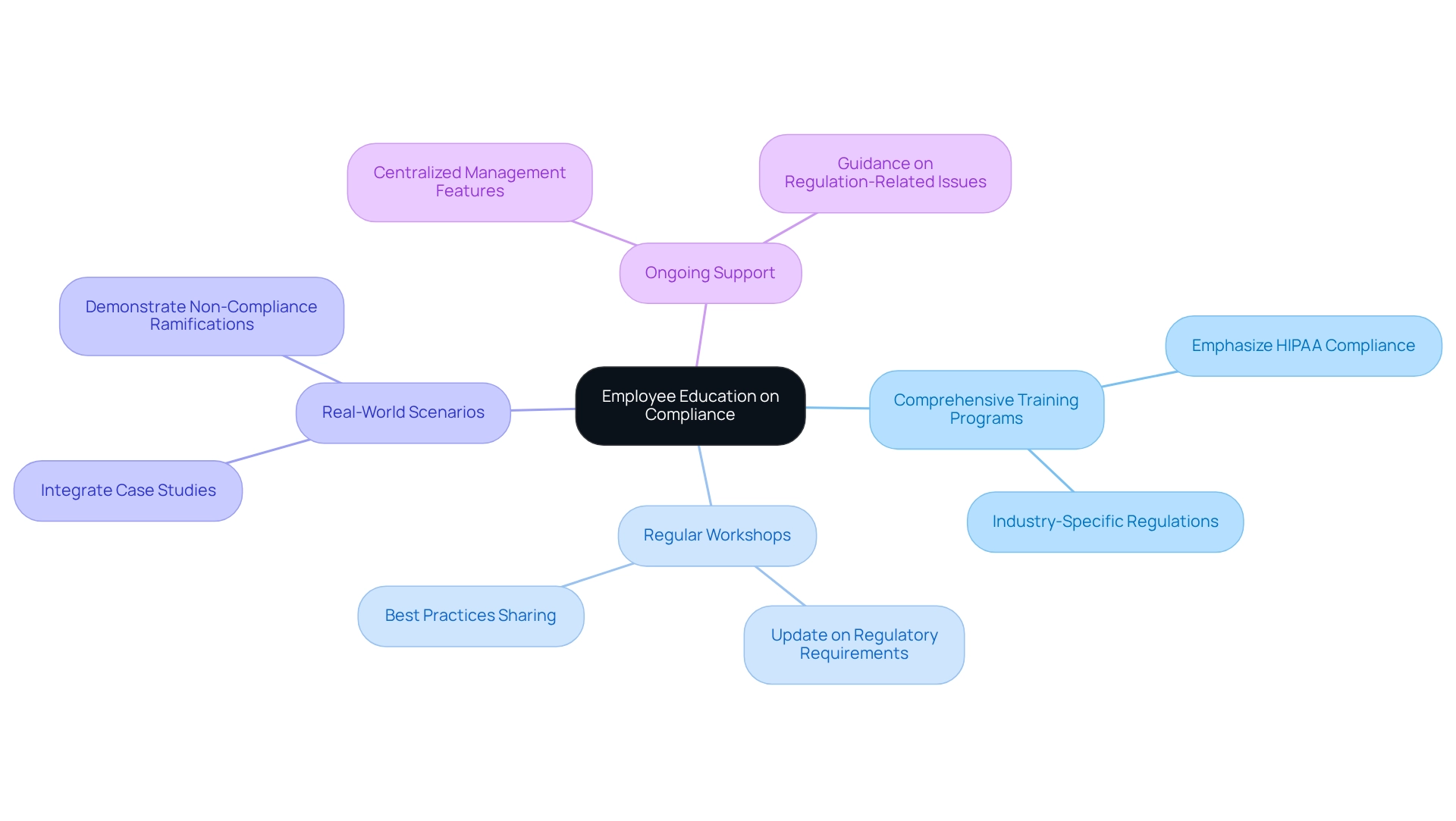
Develop Comprehensive Training Programs: Establish training initiatives that underscore the importance of Mobile Phone Communications Compliance in Regulated Industries, particularly focusing on industry-specific regulations. For instance, healthcare professionals emphasize the necessity of HIPAA-compliant tools to safeguard patient confidentiality and uphold professionalism.
-
Conduct Regular Workshops: Organize workshops and seminars aimed at keeping staff updated on the latest regulatory requirements and best practices. Experts highlight how the application's features, such as encryption and secure channels, have played a crucial role in maintaining a professional image and advocating for the app among peers.
-
Utilize Real-World Scenarios: Integrate case studies and real-world examples to demonstrate the ramifications of non-compliance and the critical nature of adhering to best practices. Users note that the application allows them to project a professional appearance at a reasonable cost, showcasing how effective tools can enhance adherence and client interactions.
-
Provide Ongoing Support: Establish a support system where employees can ask questions and seek guidance on regulation-related issues. iPlum's centralized management features empower organizations to effectively manage user permissions and profiles, ensuring that all communications adhere to Mobile Phone Communications Compliance in Regulated Industries, thus maintaining security and compliance. By investing in employee education and leveraging tools like iPlum, businesses can equip their workforce to make informed decisions regarding mobile communications. This ultimately enhances compliance and mitigates risks.
Conclusion
Navigating the complexities of regulatory compliance in mobile communications is a critical undertaking for organizations operating in regulated industries. Understanding frameworks such as HIPAA, FINRA, and GDPR is essential for ensuring that communications are secure and compliant. Utilizing tools like iPlum provides a pathway to meet these stringent requirements, offering features such as encrypted messaging, call recording, and secure text archiving—vital for maintaining confidentiality and compliance.
Implementing robust security measures, including encryption and multi-factor authentication, further strengthens the protection of sensitive data against breaches. Regular security audits and the use of secure mobile applications not only ensure compliance with regulations but also foster a culture of security and accountability.
Integrating mobile solutions with existing compliance systems enhances operational efficiency while streamlining compliance efforts. By regularly assessing and updating these systems, organizations can adapt to evolving regulations and maintain high standards.
Investing in employee education is paramount. Comprehensive training programs and ongoing support empower staff to understand compliance requirements and best practices, significantly reducing risks associated with non-compliance. By cultivating a culture of awareness and responsibility, organizations can enhance their communication strategies while safeguarding sensitive information.
In conclusion, the integration of secure mobile communication solutions, adherence to regulatory frameworks, and a commitment to employee education are fundamental for organizations aiming to navigate the challenges of compliance effectively. Embracing these strategies not only protects sensitive data but also positions businesses for success in a rapidly evolving landscape.
Frequently Asked Questions
Why is understanding Mobile Phone Communications Compliance in Regulated Industries important?
Understanding Mobile Phone Communications Compliance is essential for maintaining operational integrity and adhering to relevant regulatory frameworks in regulated sectors.
What are some key regulations affecting mobile communications in regulated industries?
Key regulations include HIPAA for healthcare organizations, which focuses on patient privacy, and FINRA for financial services firms, which emphasizes message retention and supervision.
How does HIPAA affect mobile communications in healthcare?
HIPAA requires healthcare organizations to ensure secure interactions that comply with patient privacy laws, utilizing options like encrypted messaging and secure call solutions to maintain patient confidentiality.
What features does the platform provide to support HIPAA compliance?
The platform offers HIPAA-compliant options such as virtual phone systems, secure messaging, and dedicated fax lines for secure and efficient communication among healthcare professionals.
What regulations do financial services firms need to comply with regarding mobile communications?
Financial services firms must comply with FINRA guidelines, which include stringent requirements for message retention and supervision of communications.
How does the platform assist financial services firms in achieving compliance?
The platform supports compliance by providing features like call recording and text archiving, which help firms retain and oversee their wireless interactions according to industry standards.
What security features are essential for Mobile Phone Communications Compliance?
Essential security features include encryption and advanced password policies, which help organizations comply with both industry regulations and GDPR mandates.
How can companies enhance their compliance strategies?
By comprehending relevant regulations and leveraging secure messaging solutions, companies can significantly enhance their compliance strategies and avoid costly penalties.

