


%20(1).avif)
.avif)

Introduction
In an increasingly regulated landscape, legal professionals face the daunting challenge of navigating a complex web of compliance requirements related to mobile communications. With stakes high, understanding HIPAA regulations, state bar rules, and data protection laws is crucial for ensuring secure communication practices.
As technology evolves, the demand for effective strategies to safeguard sensitive client information while maintaining compliance becomes paramount.
This article explores essential compliance requirements, best practices for secure communication, and innovative technology solutions that empower legal professionals to manage their communication needs effectively and responsibly.
Understand Mobile Communications Compliance Requirements
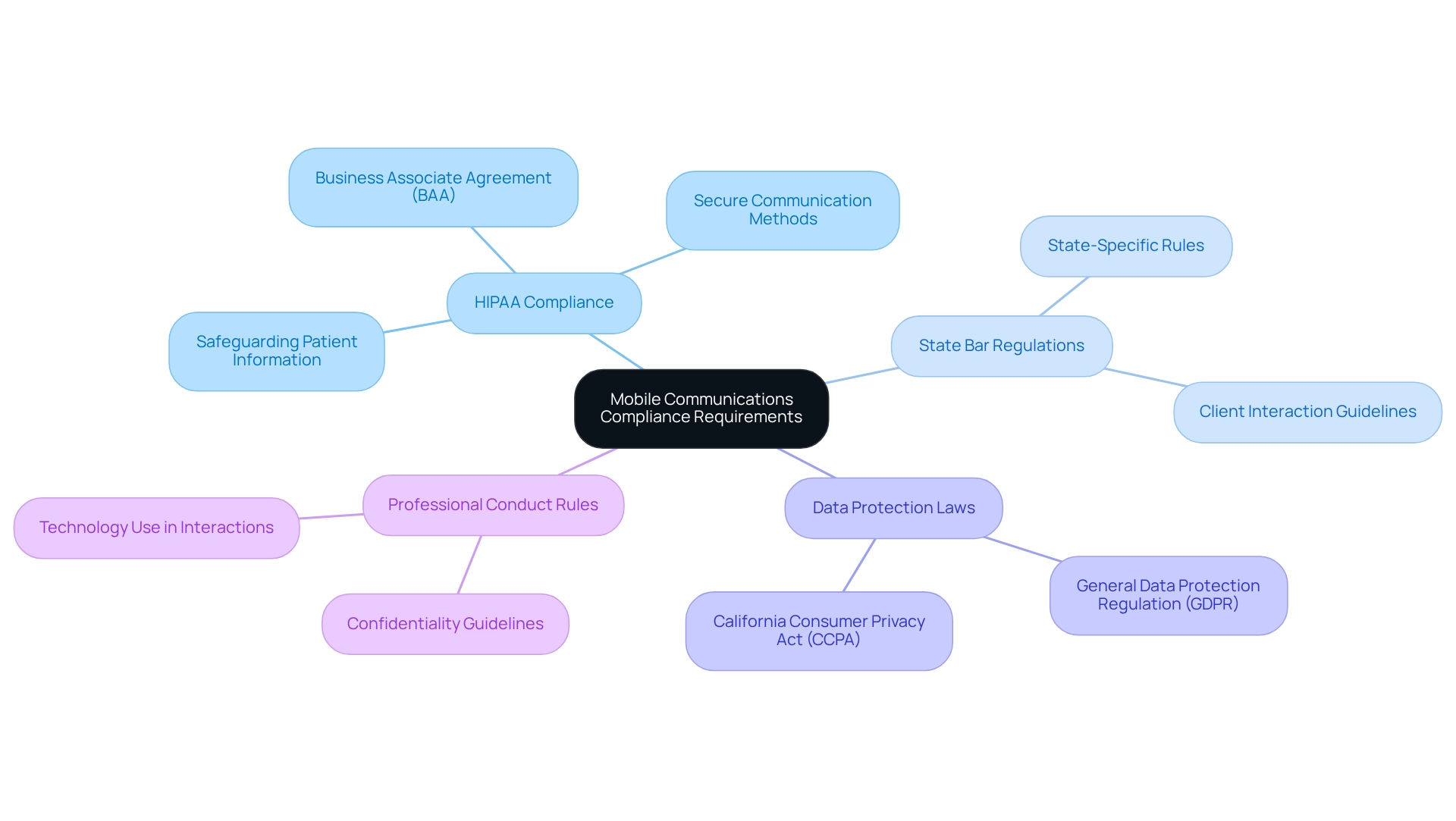
To effectively navigate the Mobile Phone Communications Compliance for Legal Professionals, they must first familiarize themselves with the specific regulations that apply to their practice. Key areas to focus on include:
-
HIPAA Compliance: For legal professionals in healthcare, understanding the Health Insurance Portability and Accountability Act (HIPAA) is essential. This law mandates the safeguarding of patient information, necessitating secure methods when discussing sensitive data. iPlum offers HIPAA-compliant messaging solutions, including virtual phone systems that facilitate secure calling and texting, ensuring patient information remains private. Additionally, iPlum provides a Business Associate Agreement (BAA) to further support compliance with HIPAA regulations.
-
State Bar Regulations: Each state has its own rules governing attorney conduct, including interactions with clients. Review your state bar association's guidelines to ensure compliance.
-
Data Protection Laws: Familiarize yourself with data protection regulations such as the General Data Protection Regulation (GDPR) for clients in the EU, or the California Consumer Privacy Act (CCPA) for clients in California.
-
Professional Conduct Rules: Understand the guidelines of professional behavior that dictate how attorneys should interact with clients, including confidentiality and the use of technology in interactions. The reliable messaging and dedicated fax lines offered by iPlum ensure Mobile Phone Communications Compliance for Legal Professionals while adding extra layers of protection. Furthermore, this service allows for the setup of phone trees, enhancing communication efficiency within legal practices while ensuring Mobile Phone Communications Compliance for Legal Professionals. By grasping these compliance requirements, legal professionals can better prepare to implement secure communication practices that protect both their clients and their practice. Additionally, the advanced security features of iPlum, such as encryption and team collaboration tools, enhance risk management for organizations in the insurance sector, ensuring that sensitive information is handled appropriately. For pricing details on HIPAA-compliant solutions, please refer to iPlum's offerings.
Implement Best Practices for Secure Communication
To guarantee the safe exchange of information, legal experts must embrace best practices that protect sensitive data.
-
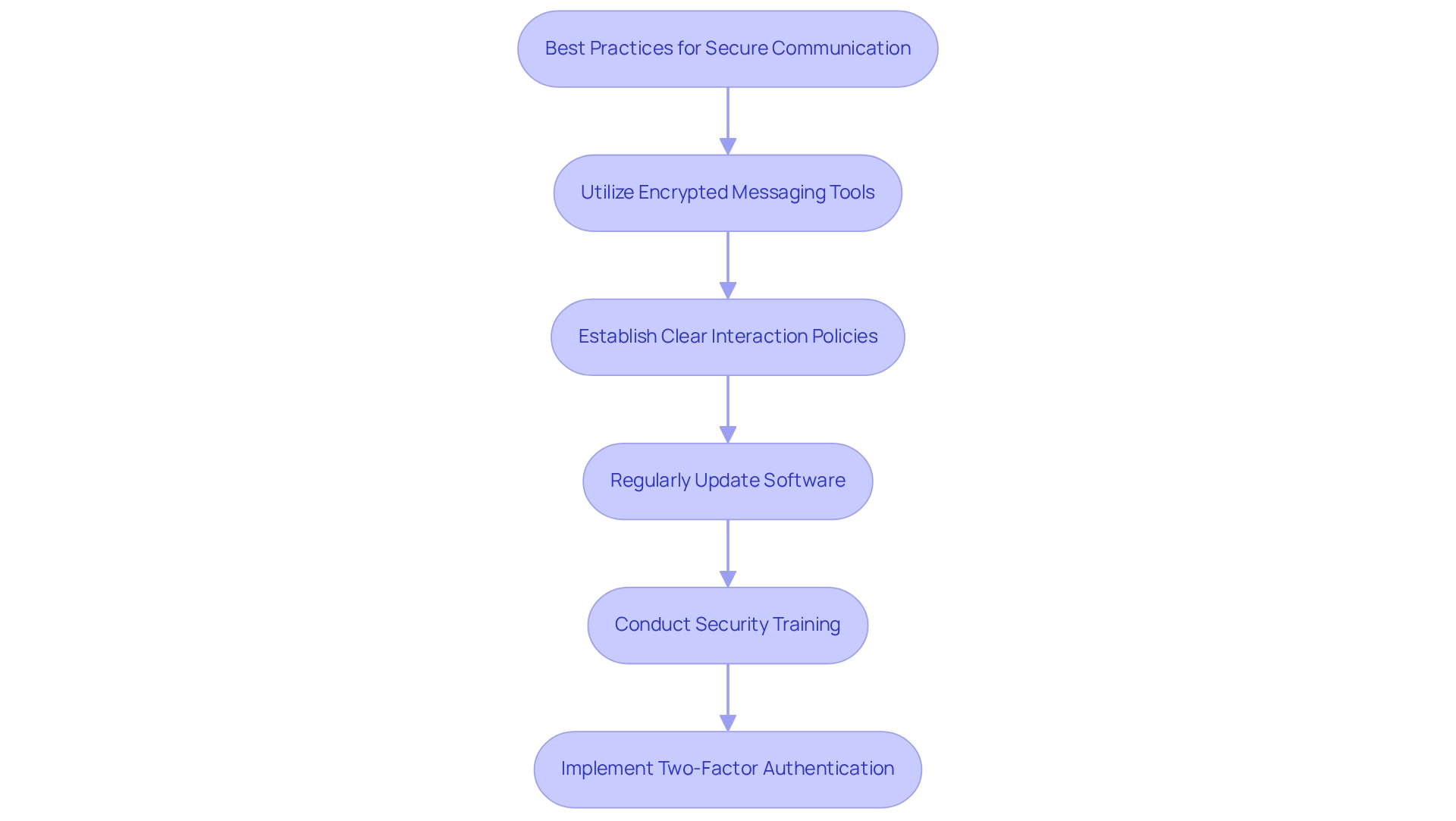
Utilize Encrypted Messaging Tools: It is crucial to select mobile platforms that offer end-to-end encryption, safeguarding client information from unauthorized access. Tools like iPlum provide secure texting and calling features, including automatic call recording and text backup, essential for maintaining compliance with legal standards and ensuring data security.
-
Establish Clear Interaction Policies: Implementing guidelines regarding the use of personal devices for work-related interactions is vital. Training all staff on these policies minimizes risks, especially when using BYOD (Bring Your Own Device) systems supported by iPlum.
-
Regularly Update Software: Keeping all messaging applications and devices updated is fundamental to protecting against vulnerabilities. Regular updates often include security patches, crucial for maintaining compliance, particularly in industries with strict regulations.
-
Conduct Security Training: Ongoing training for employees on secure messaging practices is essential. This includes recognizing phishing attempts and understanding data privacy laws. Emphasizing the use of tools that apply advanced password policies and two-factor authentication significantly improves security.
-
Implement Two-Factor Authentication: Enhance security by requiring two-factor authentication for accessing messaging tools, adding an extra layer of protection against unauthorized access. iPlum's robust security features, such as encryption and message expiration, further enhance the protection of sensitive information, which is essential for maintaining Mobile Phone Communications Compliance for Legal Professionals.
By adhering to these best practices, legal professionals can significantly reduce the risk of data breaches and ensure alignment with relevant regulations, utilizing iPlum's capabilities for secure communication.
Utilize Technology Solutions for Enhanced Compliance
To enhance adherence through technology, legal professionals must consider several key solutions:
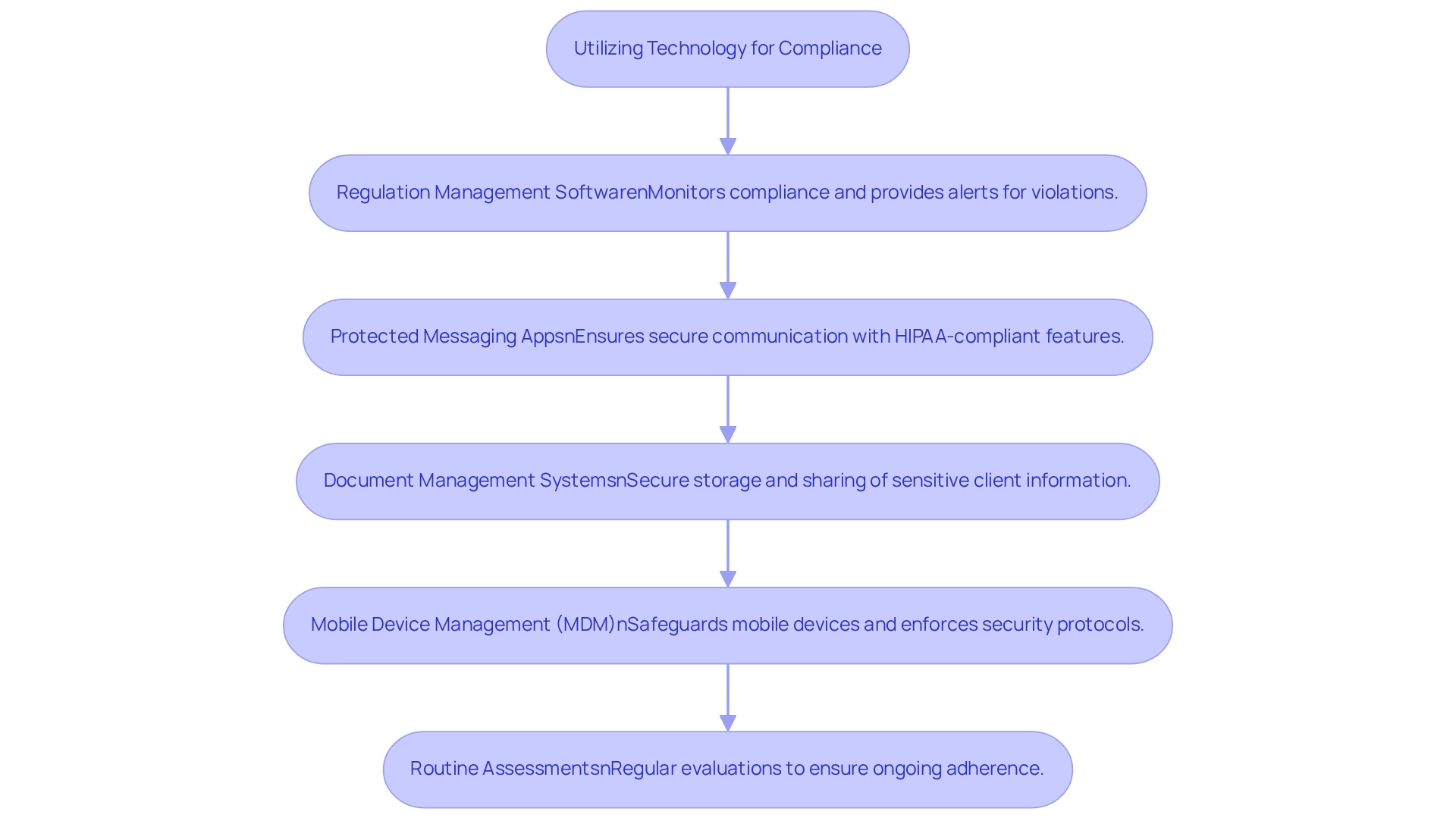
- Regulation Management Software: Implement software that monitors compliance with various regulations, providing timely alerts for potential violations. This includes tools that oversee communication channels to ensure Mobile Phone Communications Compliance for Legal Professionals with HIPAA or state bar regulations.
- Protected Messaging Apps: Leverage messaging applications specifically designed for legal professionals, such as those offering HIPAA-compliant features. iPlum stands out with its robust protected texting capabilities, HD calling, and voicemail, ensuring all communications are encrypted and secure—critical for maintaining patient confidentiality in healthcare settings.
- Document Management Systems: Adopt document management systems that provide secure storage and sharing options for sensitive client information, ensuring compliance with data protection regulations.
- Mobile Device Management (MDM): Utilize MDM solutions to safeguard mobile devices used for work. This includes enforcing security protocols, remotely wiping data from lost devices, and ensuring that only compliant applications are in use.
- Routine Assessments: Conduct regular evaluations of your communication methods and technological solutions to ensure ongoing adherence. This proactive approach helps identify and address potential challenges before they escalate.
By integrating these technological solutions, including comprehensive mobile features like HD calling, voicemail, protected texting, and dedicated fax lines, legal professionals can achieve Mobile Phone Communications Compliance for Legal Professionals while streamlining their regulatory efforts and enhancing the security of their communications. Case studies demonstrate how healthcare practices effectively utilize iPlum for HIPAA adherence, showcasing its role in facilitating secure interactions for remote employees while preserving physician privacy.
Monitor and Evaluate Compliance Effectiveness
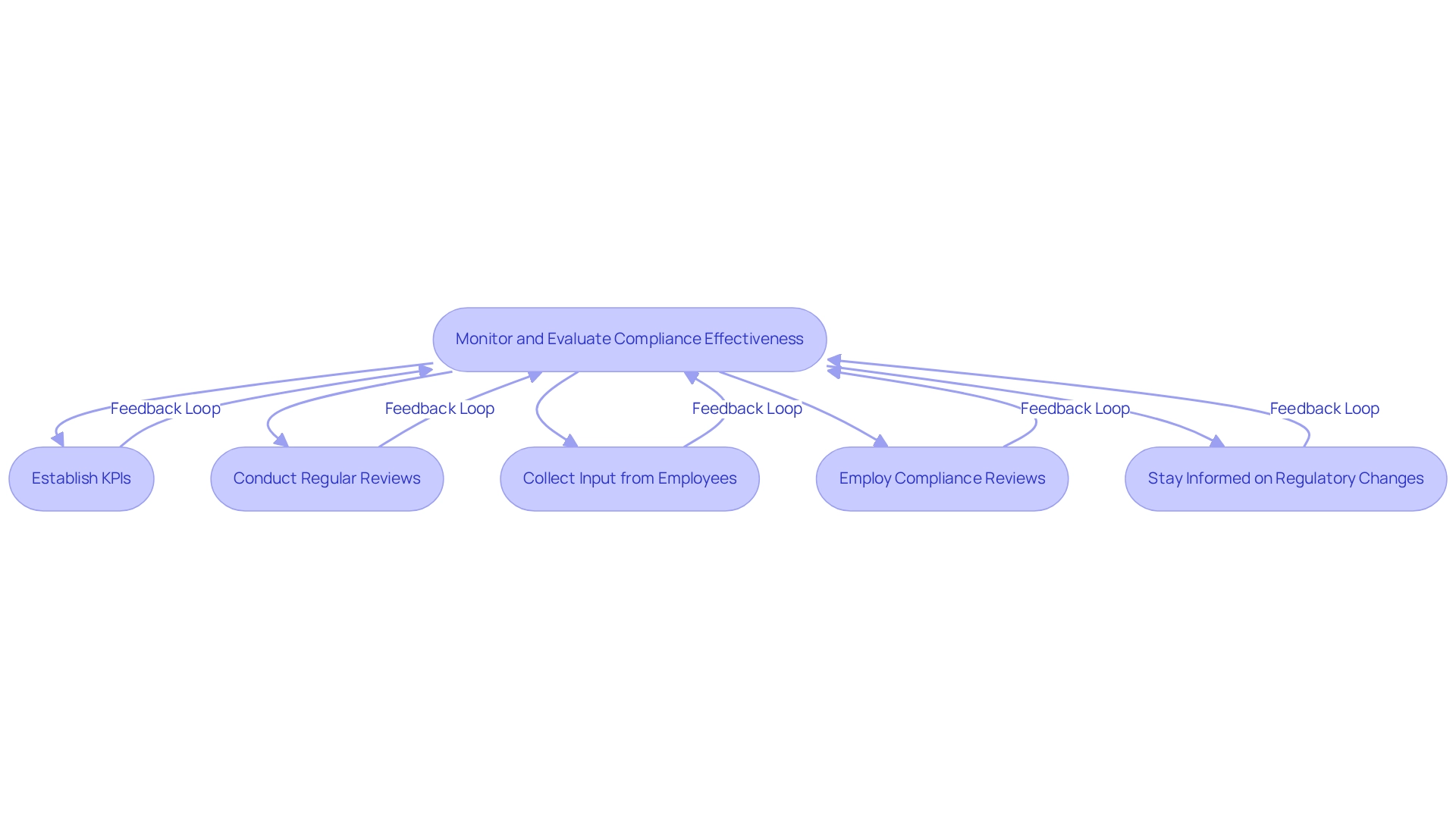
To effectively monitor and assess adherence effectiveness, legal professionals must take decisive action in line with Mobile Phone Communications Compliance for Legal Professionals, which includes establishing Key Performance Indicators (KPIs) associated with messaging protocols, such as the number of security incidents, employee adherence to messaging policies, and client feedback on information safety. Utilizing tools like iPlum can help track these metrics effectively.
Conduct Regular Reviews: Schedule periodic assessments of information sharing practices and compliance measures. This can involve evaluating the effectiveness of encryption methods and the safety of messaging tools. The secure channels and encryption features of this service provide a solid foundation for these assessments.
Collect Input from Employees: Encourage employees to share their thoughts on messaging practices and any difficulties they encounter in following regulatory measures. This feedback can help identify areas for improvement. The user-friendly interface of the application can facilitate this feedback process.
Employ Compliance Reviews: Involve external auditors to carry out adherence evaluations, offering an impartial assessment of your interaction methods and pinpointing any deficiencies in regulations. Adherence to financial and legal regulations, such as the Dodd-Frank and Consumer Protection Acts, can be a key point in these audits.
Stay Informed on Regulatory Changes: Regularly refresh your understanding of updates in regulations that may impact adherence. This proactive approach ensures that your practices remain aligned with current legal standards. iPlum's ongoing updates and security functionalities can aid in adhering to changing regulations regarding Mobile Phone Communications Compliance for Legal Professionals. By applying these monitoring and assessment strategies, legal experts can ensure that their interaction practices are not only in line with regulations but also consistently enhancing. They can utilize alternatives to improve security and efficiency. Furthermore, healthcare IT directors can benefit from iPlum's capabilities in ensuring secure communication, which is essential for maintaining compliance in the healthcare sector.
Conclusion
Understanding and implementing compliance requirements for mobile communications is essential for legal professionals navigating the complexities of modern regulations. The critical areas of focus include:
- HIPAA compliance
- State bar regulations
- Data protection laws
These areas underscore the importance of secure communication methods. By familiarizing themselves with these requirements, legal professionals can better protect sensitive client information and uphold their ethical obligations.
Best practices for secure communication emphasize the need for:
- Encrypted tools
- Clear policies
- Regular software updates
- Security training
By adopting these practices and leveraging technology solutions like iPlum, legal professionals can significantly mitigate risks associated with data breaches and ensure compliance with relevant regulations.
Furthermore, the integration of technology solutions, such as compliance management software and secure messaging apps, offers innovative ways to enhance compliance efforts. Regular monitoring and evaluation of communication practices, including the establishment of KPIs and feedback mechanisms, contribute to a robust compliance framework.
In summary, prioritizing compliance in mobile communications is not merely a regulatory necessity; it is a fundamental aspect of maintaining client trust and safeguarding sensitive information. By embracing the outlined strategies and technologies, legal professionals can navigate the challenges of compliance with confidence, ultimately leading to improved security and efficiency in their communication practices.
Frequently Asked Questions
What is the first step for legal professionals to navigate Mobile Phone Communications Compliance?
Legal professionals must familiarize themselves with the specific regulations that apply to their practice.
What does HIPAA Compliance entail for legal professionals in healthcare?
HIPAA Compliance requires understanding the Health Insurance Portability and Accountability Act, which mandates safeguarding patient information and using secure methods for discussing sensitive data.
How can iPlum assist with HIPAA Compliance?
iPlum offers HIPAA-compliant messaging solutions, including virtual phone systems for secure calling and texting, and provides a Business Associate Agreement (BAA) to support compliance with HIPAA regulations.
Why is it important for legal professionals to review State Bar Regulations?
Each state has its own rules governing attorney conduct, including client interactions, so reviewing these guidelines ensures compliance.
What data protection laws should legal professionals be aware of?
Legal professionals should familiarize themselves with regulations such as the General Data Protection Regulation (GDPR) for clients in the EU and the California Consumer Privacy Act (CCPA) for clients in California.
What are Professional Conduct Rules in relation to legal practice?
Professional Conduct Rules dictate how attorneys should interact with clients, focusing on confidentiality and the appropriate use of technology in communications.
How does iPlum enhance Mobile Phone Communications Compliance for legal professionals?
iPlum provides reliable messaging, dedicated fax lines, and allows for the setup of phone trees, all of which help ensure compliance while enhancing communication efficiency.
What advanced security features does iPlum offer?
iPlum includes advanced security features such as encryption and team collaboration tools, which enhance risk management for organizations and ensure sensitive information is handled appropriately.
Where can legal professionals find pricing details for HIPAA-compliant solutions?
Pricing details for HIPAA-compliant solutions can be found in iPlum's offerings.

