


%20(1).avif)
.avif)
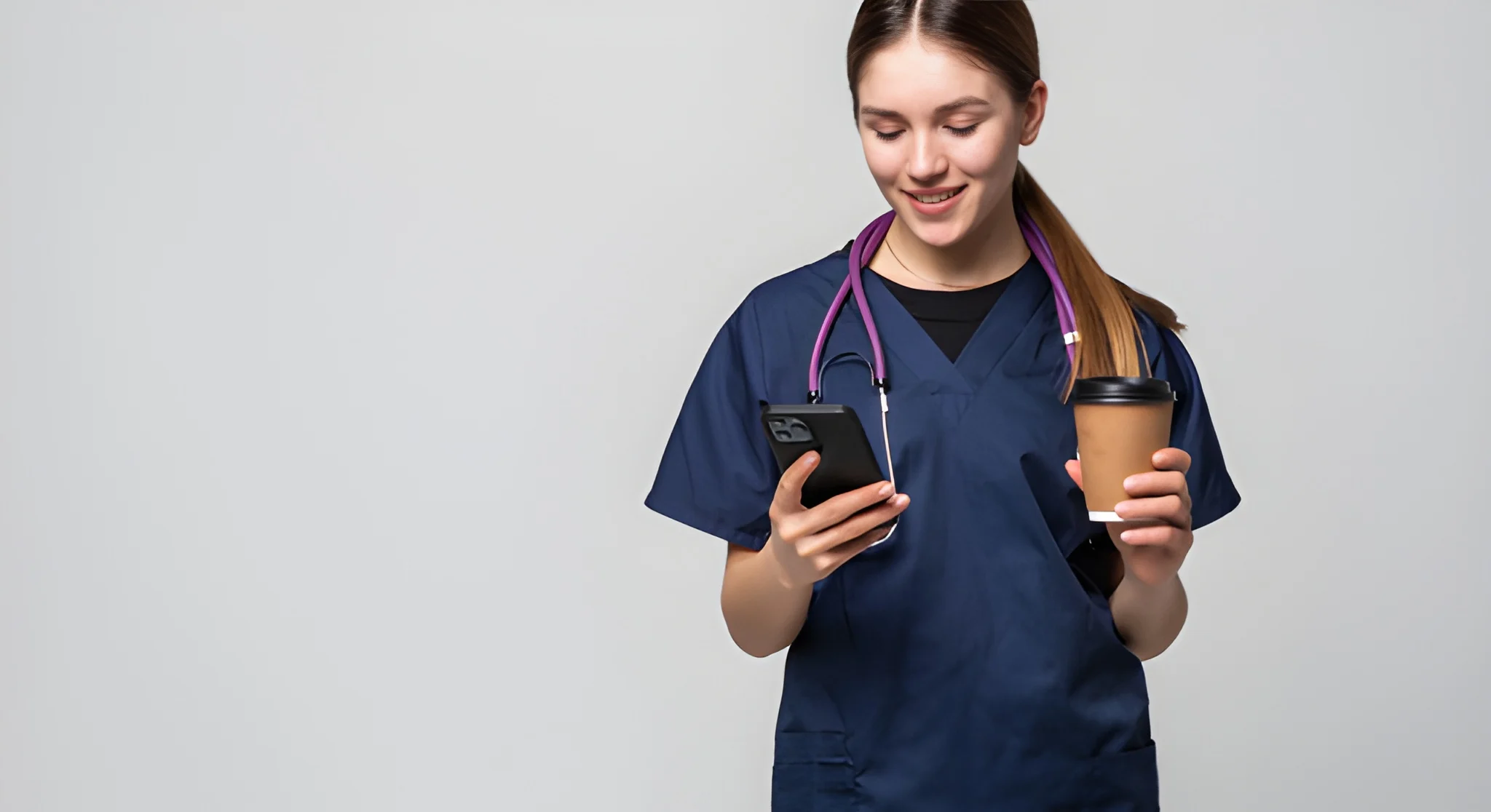
The client is a primary care practice with 28 clinicians operating across three locations.
The practice provides comprehensive patient care, including routine visits, care coordination between offices, and post-discharge follow-up. The practice had a business phone system to handle incoming patient calls.
However, as patient communication expanded to include follow-up questions and care coordination, clinicians increasingly relied on disjointed channels like email and standard text messaging across individual mobile devices.
Because patients often replied by text rather than email, staff struggled to maintain a complete history of patient interactions.
Additionally, communicating sensitive health details over unencrypted standard SMS posed privacy risks and fragmented care coordination between clinic locations.
Diane wanted to consolidate all clinic locations onto a unified calling and messaging platform.
This would allow clinicians to securely exchange messages with patients, coordinate care seamlessly across offices, and provide patients with dedicated numbers for calls and texts after discharge, while using firm-managed business numbers.
Table of Contents
4. Secure your clinic's calls and messages with iPlum
The challenge: disconnected patient communications and fragmented care coordination
The clinic's existing phone setup was effective for handling basic incoming calls, but it could not support the evolving ways patients and clinicians needed to communicate.
Patient follow-ups became scattered across calls, emails, and standard mobile texting, making it difficult for staff to track ongoing patient conversations.
While functional for basic call handling, the existing system presented the following challenges:
Patient communications were fragmented across separate channels
Patient interactions frequently spanned calls, emails, and text messages.
When a patient called with a question, followed up via email, and later sent a text message, staff had no centralized record of the exchange.
As a result, text responses were easily overlooked, and employees answering incoming calls often lacked the critical context from prior written communications.
Cross-care coordination required excessive back and forth
When a patient's care required input from a clinician at another clinic location, staff had to relay messages via individual phone calls and emails.
Passing information manually between offices caused administrative delays and made it difficult for multidisciplinary teams to discuss patient care, review histories, and agree on a timely response.
Post-discharge follow-up lacked a secure, standardized process
Patients frequently had questions after leaving the clinic.
While they could call the main line, many preferred the convenience of texting. Without a dedicated system for post-discharge messaging, clinicians were forced to handle follow-ups on an ad-hoc basis or risk using non-compliant channels for confidential medical discussions.
Diane needed a unified, HIPAA-compliant business phone and messaging solution that could streamline caller routing, enable secure texting, and give clinicians direct, mobile access to patient communications from anywhere.
The solution: bringing clinic calls and secure messaging under a single platform
The practice adopted iPlum to bring secure calling and messaging together for its three locations.
With iPlum, clinicians could use their existing smartphones to communicate through clinic-managed business numbers.
Unlike before, when the practice used separate channels for calls and patient follow-up, it now had a cloud-based phone system accessible through a web browser or mobile app.
Clinicians could call and message patients from their desks or mobile devices using their assigned business numbers.
iPlum enabled the practice to:
Give clinicians business numbers for patient calls and texts
The clinic assigned separate iPlum second mobile numbers to clinicians so they could handle patient calls and texts through a single app on their smartphones or computers.
Patients could now contact their assigned clinician through a designated clinic number. As a result, clinicians maintained a consistent channel for continuing conversations that began over the phone, rather than switching between email and personal cell numbers..
Move confidential conversations to secure messaging
The practice introduced iPlum’s encrypted messaging for exchanges containing sensitive patient information. Clinicians used the secure channel on their devices and invited patients to create a free account for secure, bidirectional texting.
With iPlum, a patient with a post-discharge question could securely message their care team, and clinicians would respond through the same HIPAA-compliant channel.
Use group messaging to coordinate care between locations
Clinicians leveraged secure group messaging to discuss patient care with colleagues across different clinic locations.
When a follow-up inquiry required multi-specialty input, clinicians could review the details together in a shared thread, agree on a treatment plan, and assign who would contact the patient. The new setup eliminated the need for repetitive internal phone calls and email chains.
Provide a dedicated number at discharge
The clinic integrated a dedicated iPlum number into its post-discharge process. Before leaving, patients received clear instructions on how to call or text the dedicated line and access secure messaging for confidential questions.
The practice assigned specific staff to review and respond to incoming messages, ensuring every patient had a clear point of contact and timely follow-up.
The results: more consistent communication and an optimized patient experience
By deploying iPlum across all three locations, the practice established a unified workflow for patient calls, secure messaging, and inter-office care coordination.
After iPlum, the practice reported the following key operational improvements:
- Clear patient follow-up: Patients left with a designated number and clear instructions for contacting their care team after discharge, making post-visit care more personal and accessible.
- Complete conversation history: Clinicians could reference complete message threads before responding, avoiding fragmented records and missed context.
- Seamless multi-location coordination: Secure group messaging enabled clinicians across different offices to collaborate efficiently on patient care and quickly assign responsibilities.
- Standardized HIPAA-compliant communication: Confidential patient text exchanges moved entirely from standard SMS to iPlum's secure, encrypted messaging channel under central administration.
It also reported the following numbers, further underscoring iPlum's impact.
- 100% platform adoption across all 3 clinic locations and 28 clinicians
- 95% patient satisfaction with follow-up communications
- 75% reduction in average response time during business hours
- 67% reduction in unanswered messages remaining at the end of the business day, falling from 30 to 10 per 200 received
Secure your clinic's calls and messages with iPlum
If fragmented channels and multi-location coordination are slowing down your team, it is time to unify calling and secure messaging into a single platform.
With iPlum, clinicians can manage calls, encrypted texts, and group care discussions directly from their existing smartphones, all while keeping patient communication secure and professional.
Sign up for iPlum to connect your locations and improve patient follow-up.

