


%20(1).avif)
.avif)

Introduction
In the dynamic realm of mobile communications, insurance professionals encounter the pressing challenge of navigating intricate compliance regulations. With mandates such as the Health Insurance Portability and Accountability Act (HIPAA) and the rigorous standards established by the Financial Industry Regulatory Authority (FINRA), a comprehensive understanding of these rules is paramount for safeguarding sensitive information.
As organizations endeavor to implement robust communication strategies, tools like iPlum emerge as indispensable allies. These solutions not only fulfill regulatory requirements but also significantly enhance operational efficiency.
This article explores the pivotal compliance challenges and solutions that insurance companies must address to protect their clients and ensure secure communications in an increasingly digital landscape. What measures are you taking to fortify your communication systems against potential data breaches? The implications of inadequate compliance can be severe, ranging from regulatory penalties to loss of client trust.
Discover how embracing compliant solutions can transform your approach to communication, ensuring both security and efficiency.
Understand Mobile Communications Compliance Regulations in Insurance
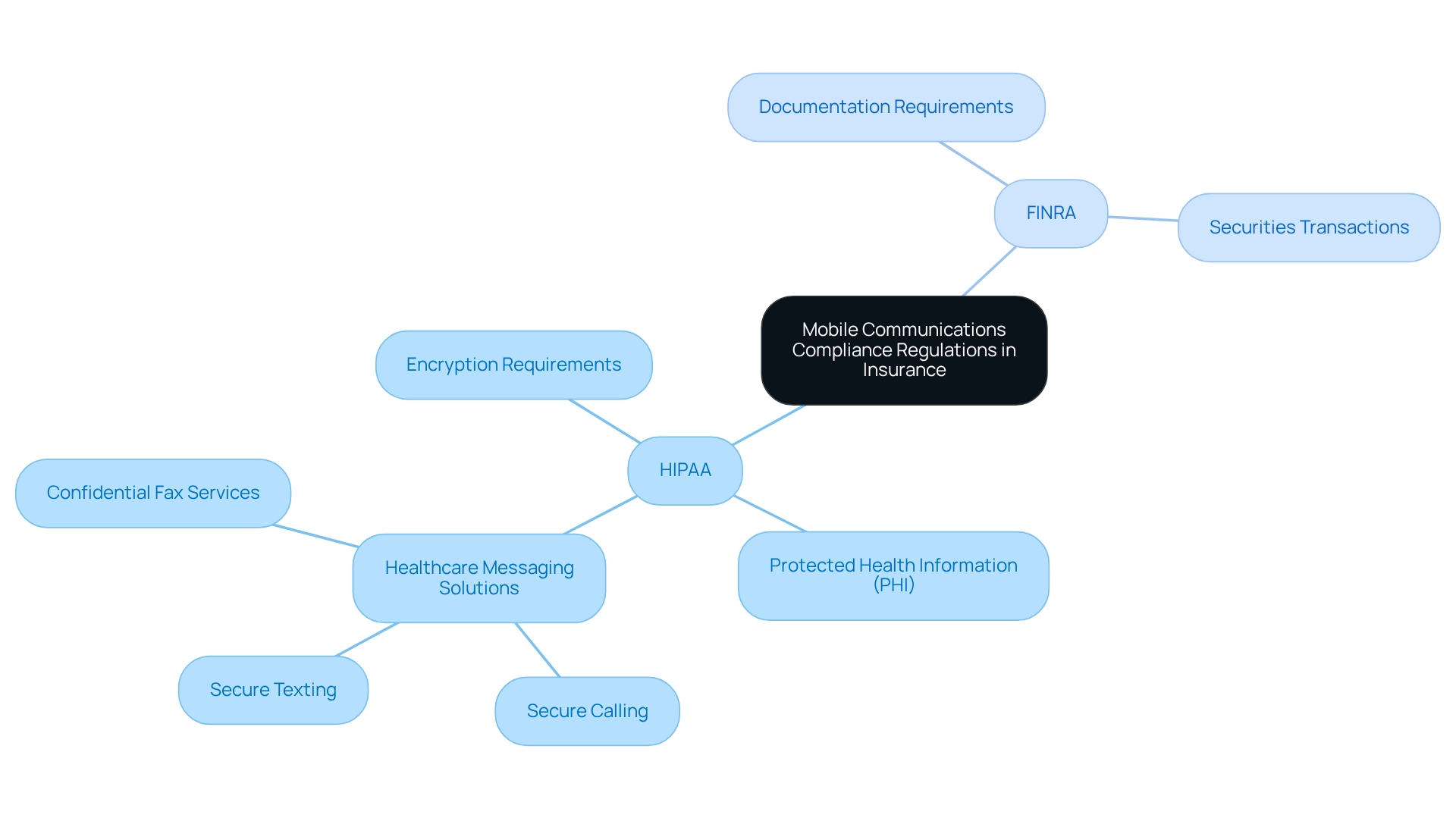
Insurance experts must familiarize themselves with the regulations governing Mobile Phone Communications Compliance for Insurance interactions. This includes the Health Insurance Portability and Accountability Act (HIPAA) for healthcare-related communications and the Financial Industry Regulatory Authority (FINRA) rules for financial services. These regulations dictate the transmission and storage of sensitive information, highlighting the necessity for protected channels. For instance, HIPAA mandates that any electronic exchange containing protected health information (PHI) must be encrypted.
This company provides HIPAA-compliant messaging solutions tailored for healthcare. These solutions feature virtual phone systems that enable secure calling and texting, dedicated lines for confidentiality, and fax services that ensure compliance with regulations. Furthermore, FINRA requires that all interactions related to securities transactions be documented and stored. Understanding these regulations equips insurance firms to adopt Mobile Phone Communications Compliance for Insurance, enabling compliant messaging strategies that protect both the organization and its clients, while enhancing operational integrity through robust features for secure and economical business interactions. Are your current systems equipped to handle these regulatory demands? Embrace compliant solutions to safeguard your business and clients alike.
Address Data Security and Privacy Challenges in Mobile Communications
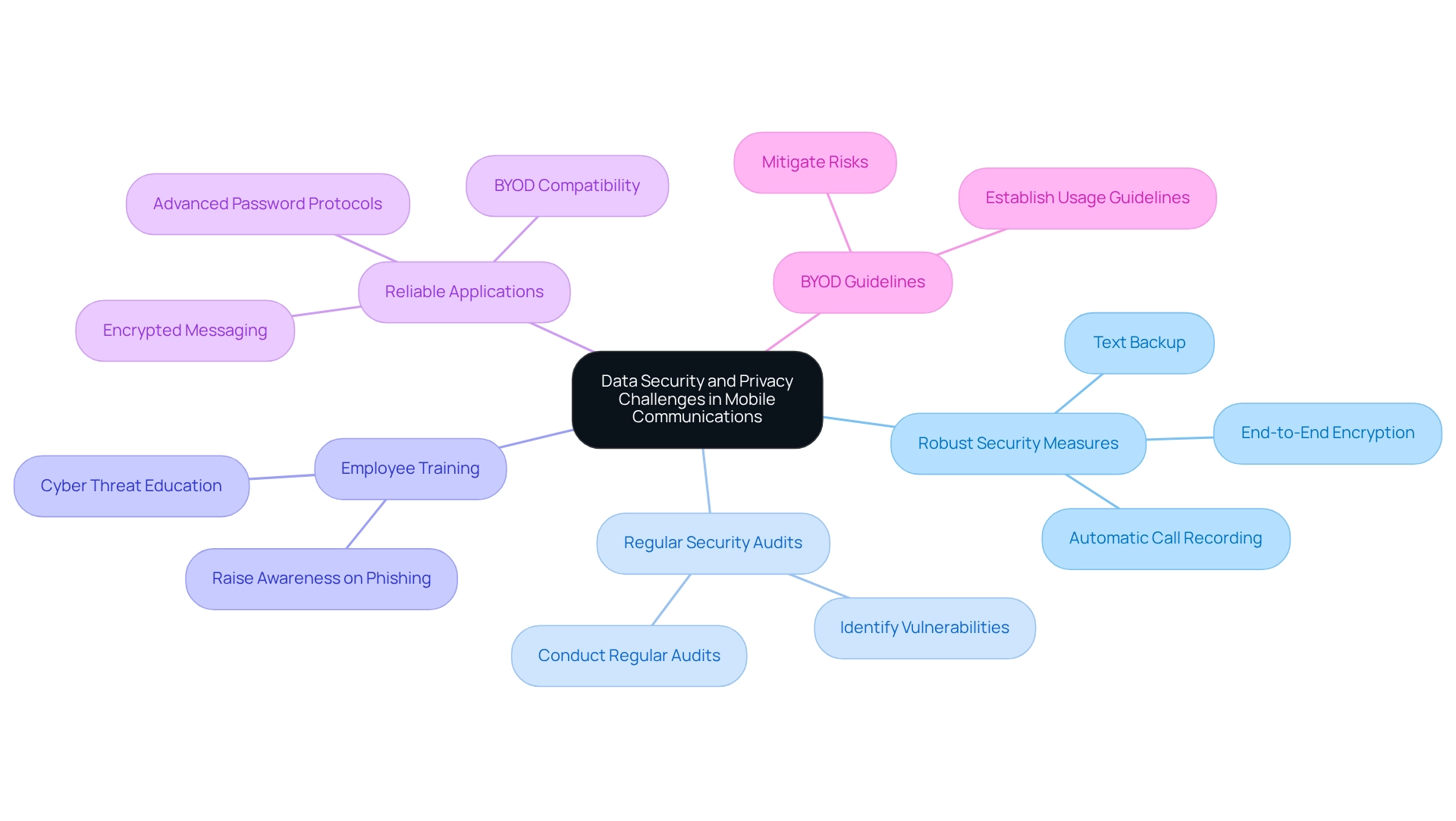
To effectively combat the escalating challenges of data security and privacy, insurance companies must adopt robust security measures that ensure Mobile Phone Communications Compliance for Insurance, including end-to-end encryption for all mobile communications. Did you know that a significant percentage of data breaches occur through mobile devices? The mobile line provided by the company not only offers automatic call recording and text backup, but it also ensures Mobile Phone Communications Compliance for Insurance by securely storing sensitive information and maintaining its confidentiality during transmission.
Furthermore, businesses should conduct regular security audits and employee training sessions to raise awareness about phishing attacks and other cyber threats. Using reliable mobile applications that adhere to industry standards and ensure Mobile Phone Communications Compliance for Insurance can significantly enhance data protection through features such as encrypted messaging, automatic data storage, advanced password protocols, and BYOD compatibility.
Moreover, iPlum's protected texting features, including message expiration and two-factor authentication, are essential in safeguarding sensitive information. Have you established explicit guidelines regarding the use of personal devices for work-related interactions? Creating these guidelines can effectively mitigate risks associated with Bring Your Own Device (BYOD) practices.
In conclusion, prioritizing data security not only protects sensitive information but also builds trust with clients. It's time to take action and implement these critical security measures.
Implement Secure Communication Solutions for Compliance
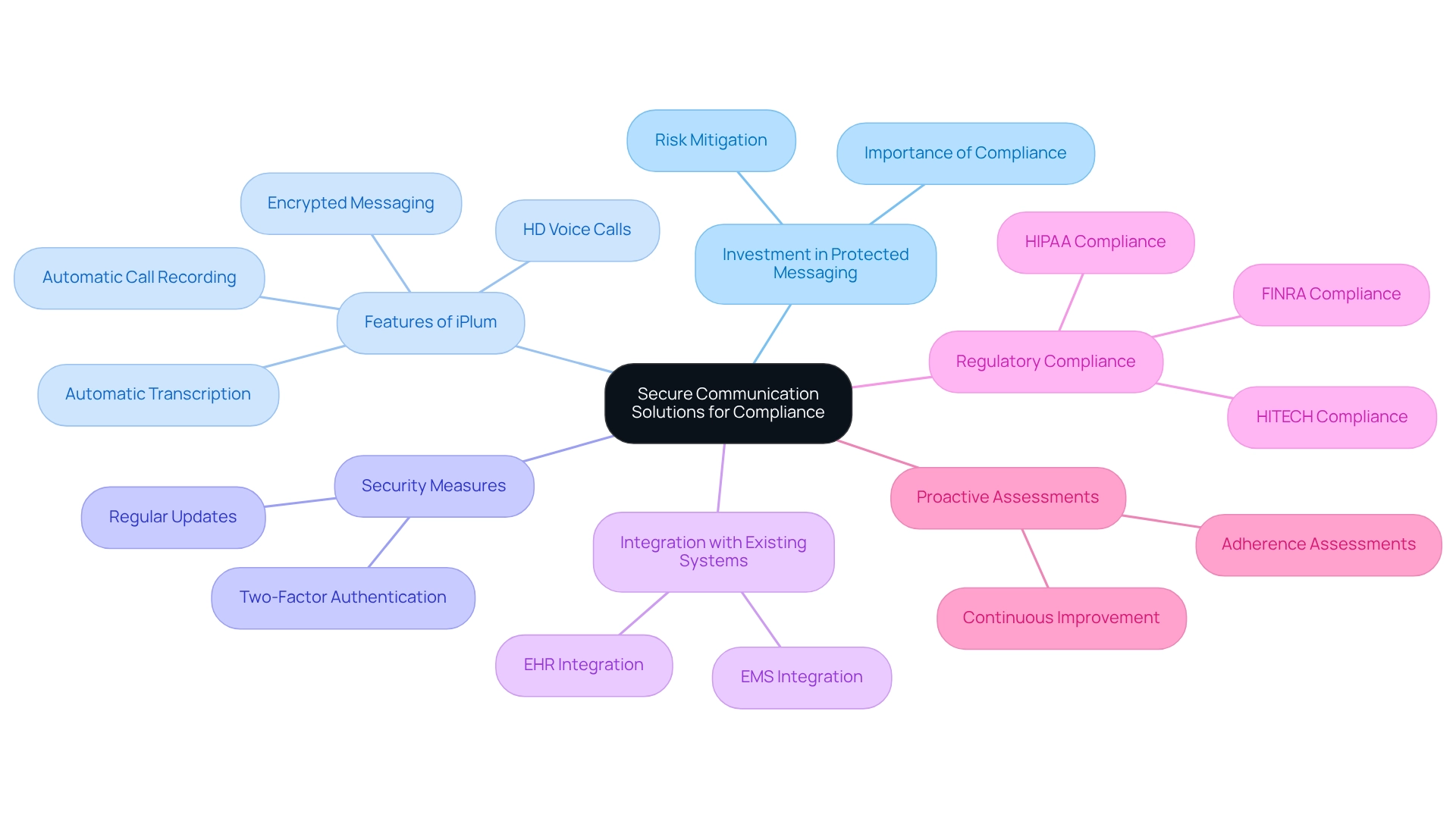
Insurance firms must prioritize investment in protected messaging solutions to achieve Mobile Phone Communications Compliance for Insurance and meet regulatory requirements. Consider the implications of data breaches—these incidents not only jeopardize sensitive information but also expose organizations to significant regulatory risks. Mobile applications like iPlum provide essential features such as HD voice calls, encrypted messaging, and automatic call recording, which ensure Mobile Phone Communications Compliance for Insurance while adhering to HIPAA, HITECH, and FINRA regulations.
Furthermore, the platform's advanced security measures, including encryption and two-factor authentication (2FA), guarantee that businesses maintain secure communication channels. This service seamlessly integrates with existing systems, such as EHR and EMS, minimizing disruptions while enhancing operational efficiency. Regular updates and adherence assessments of these tools empower organizations to remain proactive regarding regulatory changes.
In addition, automatic transcription of voicemails and text responses aids in accurately recording communications, thus improving accountability and facilitating audit processes. The inclusion of a Business Associate Agreement (BAA) further solidifies iPlum's commitment to Mobile Phone Communications Compliance for Insurance in regulated industries.
Why risk your organization's integrity? Embrace a compliant solution today and safeguard your communications.
Conclusion
Navigating the complexities of compliance regulations in mobile communications is critical for insurance professionals. With mandates such as HIPAA and FINRA dictating the handling of sensitive information, a thorough understanding of these requirements is essential. Implementing secure communication solutions like iPlum not only aids in meeting regulatory demands but also enhances operational efficiency through features such as encrypted messaging and secure calling.
Addressing data security and privacy challenges requires a multifaceted approach. By leveraging technologies that offer end-to-end encryption, automatic data archiving, and robust security measures, insurance companies can significantly mitigate risks associated with data breaches. Regular security audits and employee training further bolster defenses against potential cyber threats, ensuring that sensitive information is protected throughout its lifecycle.
Ultimately, investing in compliant communication solutions is not merely a regulatory obligation; it is a strategic advantage. By adopting tools designed to meet industry standards, insurance companies can safeguard client information, maintain trust, and ensure seamless communication. As the landscape of mobile communications continues to evolve, prioritizing compliance and security will be paramount for organizations aiming to thrive in a digitally driven world.
Frequently Asked Questions
What regulations must insurance experts be familiar with regarding mobile phone communications?
Insurance experts must familiarize themselves with the Health Insurance Portability and Accountability Act (HIPAA) for healthcare-related communications and the Financial Industry Regulatory Authority (FINRA) rules for financial services.
What does HIPAA require for electronic exchanges containing protected health information (PHI)?
HIPAA mandates that any electronic exchange containing protected health information (PHI) must be encrypted to ensure its security.
What solutions does the company provide for HIPAA compliance in healthcare communications?
The company provides HIPAA-compliant messaging solutions that include virtual phone systems for secure calling and texting, dedicated lines for confidentiality, and fax services that ensure compliance with regulations.
What does FINRA require regarding interactions related to securities transactions?
FINRA requires that all interactions related to securities transactions be documented and stored to maintain compliance.
How can understanding these regulations benefit insurance firms?
Understanding these regulations equips insurance firms to adopt Mobile Phone Communications Compliance for Insurance, enabling compliant messaging strategies that protect both the organization and its clients while enhancing operational integrity.
What should insurance firms consider regarding their current systems in relation to regulatory demands?
Insurance firms should assess whether their current systems are equipped to handle regulatory demands and consider embracing compliant solutions to safeguard their business and clients.

