


%20(1).avif)
.avif)
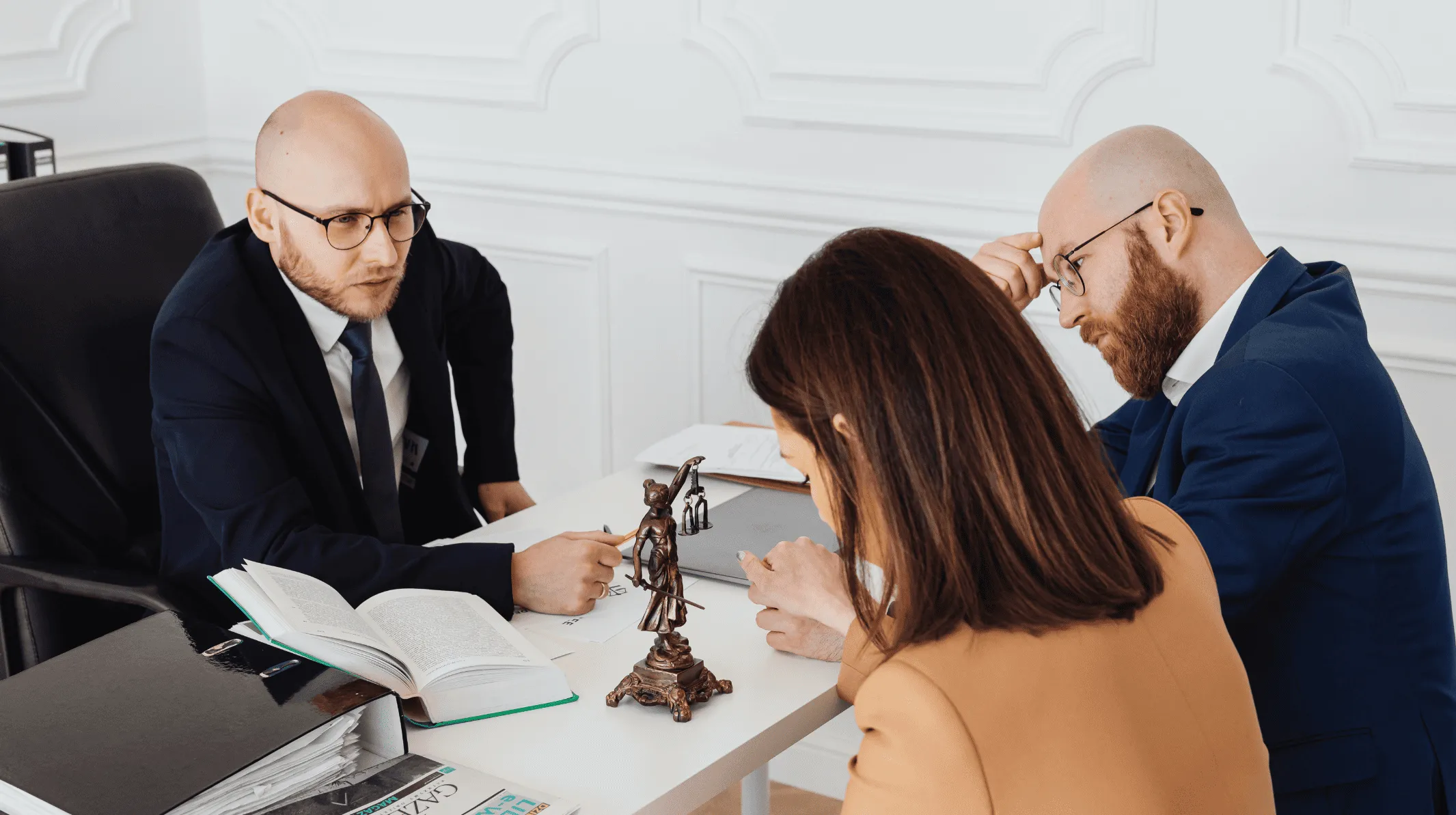
Mobile phones are, to a point, the go-to communication tools for legal professionals.
They’re convenient, easy to use, affordable, and readily available.
On the flip side, personal mobile phones can easily compromise attorney-client privilege, especially when communication happens over unsecured channels.
Strange as it may sound, a significant number of lawyers don’t realize that using a personal cell line, voicemail apps, or unencrypted texting tools could expose client data and even lead to a privilege waiver.
As mobile-first communication becomes the norm, so does the responsibility to protect it under ethical and legal standards.
In this article, we’ll help you navigate the hidden risks and ethical obligations of mobile communication.
More specifically, you’ll learn:
- How personal mobile use can jeopardize the attorney-client privilege
- Why call recording can actually help protect confidentiality
- How consent laws impact call recording legality for attorneys
- Which everyday mobile habits put privilege at risk
- What courts and bar regulators expect from lawyers using mobile devices
- What features a secure, compliant mobile line for attorneys should include
We’ll also tell you how iPlum’s dedicated business line for lawyers can help your law firm protect client conversations and meet ethical standards.
Let’s dive in
Table of Contents
1. What is attorney-client privilege, and how is it changing with the rise of mobile communication?
2. How do personal mobile phones compromise the attorney-client privilege?
3. Why is call recording crucial for attorney-client privilege?
4. How do consent laws affect legal call recording for attorneys?
5. Which everyday mobile communication scenarios threaten the attorney-client privilege?
6. What do courts and regulators expect lawyers to do to protect the privilege?
7. How does iPlum protect attorney-client privilege for mobile phone communications?
8. Wrapping up—how to start recording calls legally
What is attorney-client privilege, and how is it changing with the rise of mobile communication?
Attorney-client privilege is a legal concept that protects communications between a lawyer and their client from being disclosed without the client's consent.
It exists to promote open and honest dialogue, ensuring clients can speak freely, knowing the lawyer won't use their information against them.
It's important to distinguish this from general confidentiality.
While all attorney-client information must be confidential, privilege applies explicitly to communications made for the purpose of seeking or providing legal advice. And, it can be challenged or waived in certain situations.
Traditionally, privileged conversations happened in controlled environments.
Think law offices, secure firm email systems, or scheduled in-person meetings. Back in the day, communication was relatively slow and centralized.
As a result, maintaining privilege was straightforward. A firm could lock away physical files and archive email on internal servers. Moreover, most legal conversations took place behind closed doors.
Fast forward. Today, the legal landscape has gone mobile.
Attorneys are texting clients between hearings, taking calls during commutes, and leaving voicemails as they walk out of courtrooms. Clients, in turn, expect instant replies, direct phone access, and informal chat-based updates.
Much of this occurs on personal smartphones, using unencrypted channels such as regular phone lines, SMS, or cloud-synced voicemail apps.
Law firm infrastructure, once the main layer of security, is often left out of the equation entirely.
The result is a communication model that's fast and flexible, but highly exposed.
With mobile communication, privilege can be lost or "waived" if a third party accesses a communication, even unintentionally. That's exactly the risk when lawyers use personal mobile phones without safeguards.
For example:
- SMS messages are not encrypted and can be intercepted
- Voicemails may be stored on cloud servers (like Google or Apple), often outside of your control
- Call metadata, times, durations, and numbers may be logged and visible to carriers or third-party apps
- Phones can be lost, stolen, or shared, exposing sensitive client threads
Given the delicate nature of mobile communication, well-intentioned attorneys can inadvertently violate privilege by using the wrong tools out of convenience.
And, courts are less forgiving of such lapses.
How do personal mobile phones compromise the attorney-client privilege?
Using a personal mobile phone for legal communication opens the door to privilege breaches you can’t easily control or undo. The issue isn’t the phone itself, but how most devices handle security, storage, and access by default.
Here’s a breakdown of these vulnerabilities:
Lack of encryption, which leaves data exposed
Standard phone calls and SMS texts offer little to no encryption.
Anyone with network access, including hackers, carriers, or rogue apps, can intercept them. Worse, mobile messages often sync to cloud backups, leaving sensitive client communications vulnerable to breaches or subpoenas.
Voicemail and call logs live in the cloud
Most voicemail systems today are cloud-based by default.
Services like Apple Visual Voicemail or Google Voice store messages on third-party servers you don’t control. These systems often lack legal-grade encryption and logging, making it harder to defend privilege in the event of a breach.
Therefore, call logs, durations, and metadata are just as exposed.
Phones are easily lost, shared, or stolen
Personal phones go everywhere, from courtrooms to coffee shops to airplanes.
They also end up in the hands of family members, assistants, or even strangers if lost or stolen. Without strong access controls, anyone can open a messaging app or voicemail inbox and view privileged content.
Mixing personal and professional use increases risk
It’s common to send a client text from the same phone used for casual conversations.
But mixing personal and professional communication increases the risk of accidental disclosure, misdirected messages, or screenshot sharing. This gray area makes it harder to argue that communications were clearly privileged.
Why is call recording crucial for attorney-client privilege?
Call recording can help preserve attorney-client privilege without undermining trust or violating ethical boundaries. Also, it adds accountability and legal protection, especially in a mobile-first practice.
Here’s how:
Recorded calls provide tangible, objective proof of what was said
When disputes arise, recording can help eliminate ambiguity
Lawyers can revisit conversations to verify legal advice, instructions, or disclosures. Recordings, as a result, protect both the attorney and the client from misinterpretation.
In addition, if a client accuses a lawyer of giving bad advice or missing a key fact, the recording can show exactly what happened. The clarity goes a long way toward reducing malpractice exposure and strengthening professional integrity.
Recordings reinforce privilege when securely stored
Securely storing call recordings ensures the conversation remains confidential and protected under privilege.
Unlike handwritten notes or memory, recordings capture every word, unedited and time-stamped.
Meanwhile, encrypted, access-controlled recordings demonstrate that the attorney took steps to protect the communication. That way, it’s easier to defend privilege if a dispute lands in court.
Recordings help meet ethical and risk management obligations
Every law firm should maintain accurate records to protect clients.
For firms, recordings provide a reliable audit trail and support more effective oversight of attorneys and staff. They also help solo practitioners be accountable and compliant, especially when managing high-stakes conversations on the go.
However, only legal, consent-based recordings offer these protections.
To use call recordings effectively, lawyers must comply with applicable consent laws. Unauthorized or secret recordings can backfire, damage trust, and waive privilege.
We’ll break down those rules in the next section.
How do consent laws affect legal call recording for attorneys?
Sure, recording calls can strengthen attorney-client privilege, but only when you follow the law. Consent is a legal requirement, and violating it can undo all the protections a recording provides.
Let's unpack that.
One-party vs. two-party consent laws
Consent laws fall into two main categories.
In one-party consent states, only one person on the call, including the attorney, needs to know that the call is being recorded. Therefore, a lawyer can legally record a conversation without telling the client, as long as the lawyer is part of the call.
In two-party (or all-party) consent states, everyone on the call must agree to the call recording. Hence, failing to notify the client and obtain their consent in these states can lead to legal consequences and privilege issues.
Why must lawyers always check state-specific consent laws?
Consent laws vary widely across the U.S., and they apply based on each party's location. For example:
- California and Florida require all-party consent.
- New York and Texas only require one-party consent.
So, if you're calling across state lines, the safest approach is to assume the stricter law applies. The point is: do not just assume which law applies where; be sure to check consent every time.
Which begs the question.
What counts as proper consent during call recording?
Verbal consent at the start of a call is a good way to ensure compliance.
However, there's always a chance you may forget to give verbal notice. The best option is to use automated pre-call disclosures — a feature iPlum supports — to let clients know that you're recording the call.
Most importantly, log the consent — either with a time-stamped message, recorded acknowledgment, or CRM note.
Note: recording without consent can waive privilege or trigger liability
Secret recordings, even in one-party states, can undermine client trust and lead to claims of unethical conduct. In two-party states, they can also result in civil or criminal penalties.
And in the worst-case scenario, the court could exclude the recording as evidence and rule that the privilege was waived due to improper handling.
Which everyday mobile communication scenarios threaten the attorney-client privilege?
Privilege breaches don’t always come from hackers.
More often, lawyers compromise privilege through everyday communication habits that seem inconsequential.
Here are some common mobile scenarios that pose a risk to client confidentiality.
Texting a client from your personal phone
When you send a text from your personal number, you expose client data on an unsecured, unencrypted channel.
Besides, you risk sending a message to the wrong contact or revealing a sensitive exchange in a mixed personal thread. And, if a third party screenshots or forwards the message, you lose control of the information.
Leaving a voicemail with confidential information
If you leave a detailed voicemail, your message may land in a cloud inbox you don’t control.
See, some phones automatically transcribe and store voicemails. And, anyone with access to the client’s device, or your own, can replay the message or read the transcript. That includes family members, assistants, or synced devices.
Joining a client call over public Wi-Fi
When you connect to a call on public Wi-Fi at a coffee shop or airport, you invite anyone on that network to intercept the data.
Without a VPN or encrypted app, you expose your conversation to digital eavesdropping. You can’t defend privilege when you fail to protect the channel.
Using messaging apps like WhatsApp or Facebook Messenger
Native messaging apps prioritize convenience over compliance.
In addition, most applications back up messages in the cloud by default. In addition, their terms of service often allow limited third-party access, data mining, or integration with other platforms. On top of that, they don’t offer the audit trails, encryption, or legal safeguards that attorneys need.
Sharing one device for work and personal use
When you mix work and personal use on one phone, you lose control.
A spouse, child, or assistant could see a message preview, answer a call, or access saved contacts. Besides, even a borrowed phone could reveal privileged content if you don’t properly separate communication channels.
Each of these scenarios erodes the foundation of privilege. And the more casual your mobile habits, the harder it is to maintain client confidentiality.
What do courts and regulators expect lawyers to do to protect the privilege?
Courts and bar regulators no longer treat mobile communication as a gray area.
If you use your phone to speak with clients, you must protect those conversations with the same level of care you'd apply in your office.
Otherwise, it could cost you privilege and expose you to disciplinary action.
Here's what you need to know:
The ABA's model rules emphasize tech competence
The American Bar Association's Model Rule 1.1 requires lawyers to provide competent representation.
The rule now includes understanding the "benefits and risks associated with relevant technology." If you use a mobile phone in your practice, you must know how it affects client confidentiality.
Meanwhile, Model Rule 1.6(c) goes further.
It states that lawyers must take "reasonable efforts" to prevent unauthorized access to client information. In other words, securing your communication channels, including mobile calls, voicemails, and text messages, is an ethical duty.
State bars specific guidance on mobile communication
State bars across the country have responded to the rise of mobile communication with clear guidelines. For instance:
- California urges attorneys to use encrypted messaging whenever possible.
- Florida's ethics opinions warn against relying on SMS for sensitive client matters.
- New York reminds lawyers that cloud-based communication tools can compromise confidentiality unless properly secured.
Such regulations reflect a shift in what the profession expects from lawyers in a mobile-first world.
Courts have rejected privilege claims when lawyers used insecure methods
Judges don't just consider whether you intended to keep client communication private. They also examine whether you actually protected it.
In several cases, courts have found that attorneys waived privilege by using unencrypted email, unsecured cloud platforms, or personal phones without safeguards.
When lawyers fail to show that they took reasonable steps to protect sensitive data, courts often side with the party challenging privilege.
Professional responsibility now includes mobile security
If you communicate with clients on your mobile phone, you can't rely on good intentions.
You must actively secure those conversations with encrypted tools, proper consent procedures, and communication channels designed for compliance.
This expectation applies to everyone, including solo attorneys and small practices. So, if you neglect mobile security, you risk losing privileges, facing ethics complaints, and incurring professional liability.
How does iPlum protect attorney-client privilege for mobile phone communications?
iPlum provides lawyers with a secure, compliant mobile communication platform that protects the attorney-client privilege on your existing mobile phone.
With iPlum's second line for lawyers, you get a professional-grade solution, complete with the privacy, control, and documentation that attorneys require for protection.
These include:
Dedicated second line for secure legal communication
iPlum offers a separate business number on your personal phone.
That way, you can call and text clients from a professional line and, more importantly, keep your personal number completely private.
In addition, iPlum keeps all business communication in a secure, encrypted environment, away from your native phone apps, logs, or backups.
Automatic call recording with built-in consent features
iPlum automatically records incoming and outgoing calls while providing pre-call voice announcements to comply with all-party consent laws.
The recordings are encrypted, securely stored, and kept separate from your personal phone's storage. In addition, you can download, play, or attach them to your case files with full confidence that they support privilege.
Archived texting, voicemail, and communication logs
Every call, text, and voicemail gets stored in an encrypted vault in a searchable, downloadable, and admissible structure.
iPlum's secure archive includes time stamps, participant details, and metadata, establishing a distinct chain of custody. You can use these logs to support privilege, demonstrate compliance, or reconcile billable hours with confidence.
Compliance-grade encryption and certifications
iPlum meets the security standards required by high-compliance industries.
It offers HIPAA and SOC 2 compliance, strong password controls, and audit trail capabilities. Unlike standard phone apps or consumer tools, iPlum keeps your law firm's data out of discoverable environments like Google, Apple, or your phone carrier's cloud.
Easy integration with your legal workflow
You can port your existing firm number into iPlum or generate a new one with a few clicks.
In addition, you can attach recordings to client files, track time with detailed call logs, and manage your availability with custom business hours.
Team-ready with centralized control
iPlum allows firms to roll out secure mobile lines across their team using a central dashboard. Admins can assign numbers, enforce security settings, and oversee communication across associates efficiently.
Wrapping up—how to start recording calls legally
Attorney-client privilege is paramount for legal professionals, but you must take active steps to protect it.
As legal communication shifts to mobile, your tools must do more than answer calls. Your line must secure, document, and separate legal conversations from personal use.
Start by recording calls legally with automated consent. Store every conversation in an encrypted environment. Use a dedicated business line that keeps client data protected and privileged.
With iPlum, you meet these standards without buying a new phone or overhauling your workflow. You also get access to 50+ premium calling and texting features.
Your next step?
Click below to activate your secure mobile line built for attorneys.
Get iPlum’s legal call recording solution.

